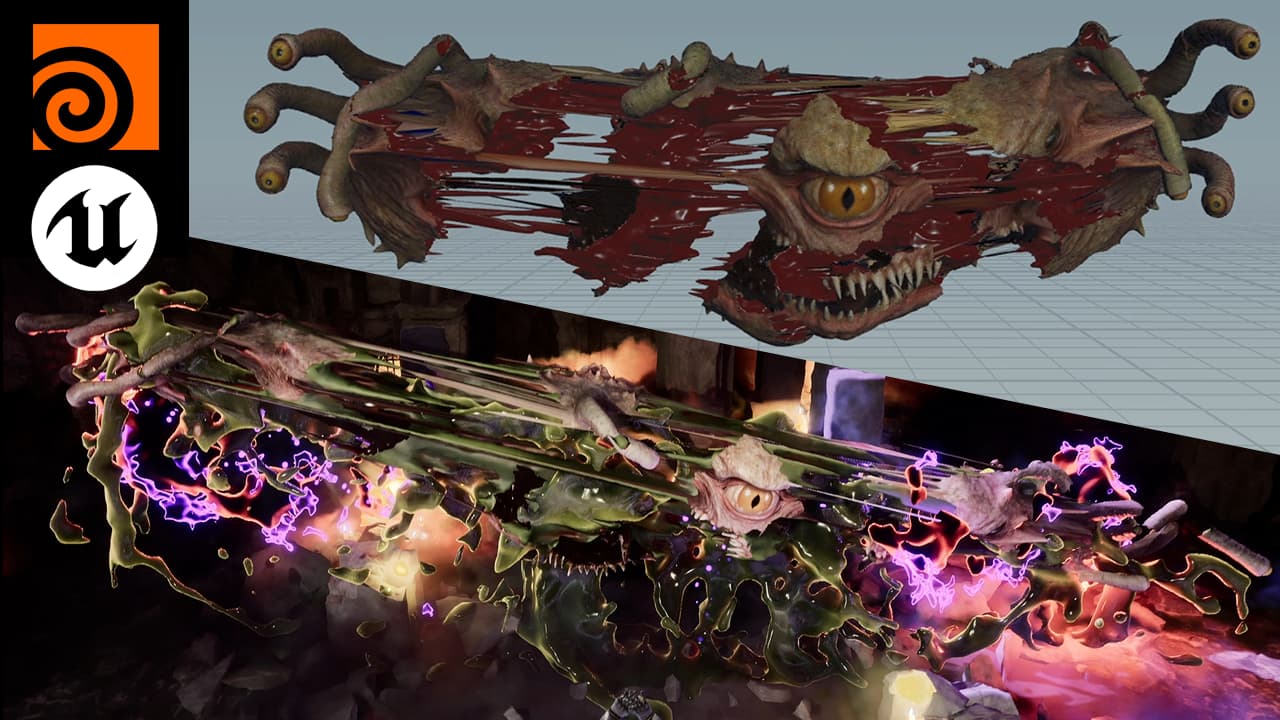
Buried Wrath – building a gameplay spell from idea to final effect
Buried Wrath is a gameplay spell concept built around a very simple fantasy:
Something erupts from the ground, causes chaos in the environment, grab a Beholder by the ass, tear it apart, and drag what’s left back underground.
The whole project was approached as an in-game prototype rather than a cinematic piece. From the start, the goal was to build a full spell loop — from cast to hit — as early as possible, even in a rough form, and then iterate on timing, clarity, and impact.
This is a short breakdown of the main creative steps behind the spell, focusing on artistic choices rather than technical detail. Although it doesn’t dive into implementation, the Houdini–Unreal workflow plays a key role, enabling fast iteration, early testing, and evaluation of the effects inside the same environment as the game logic.
Where the idea came from
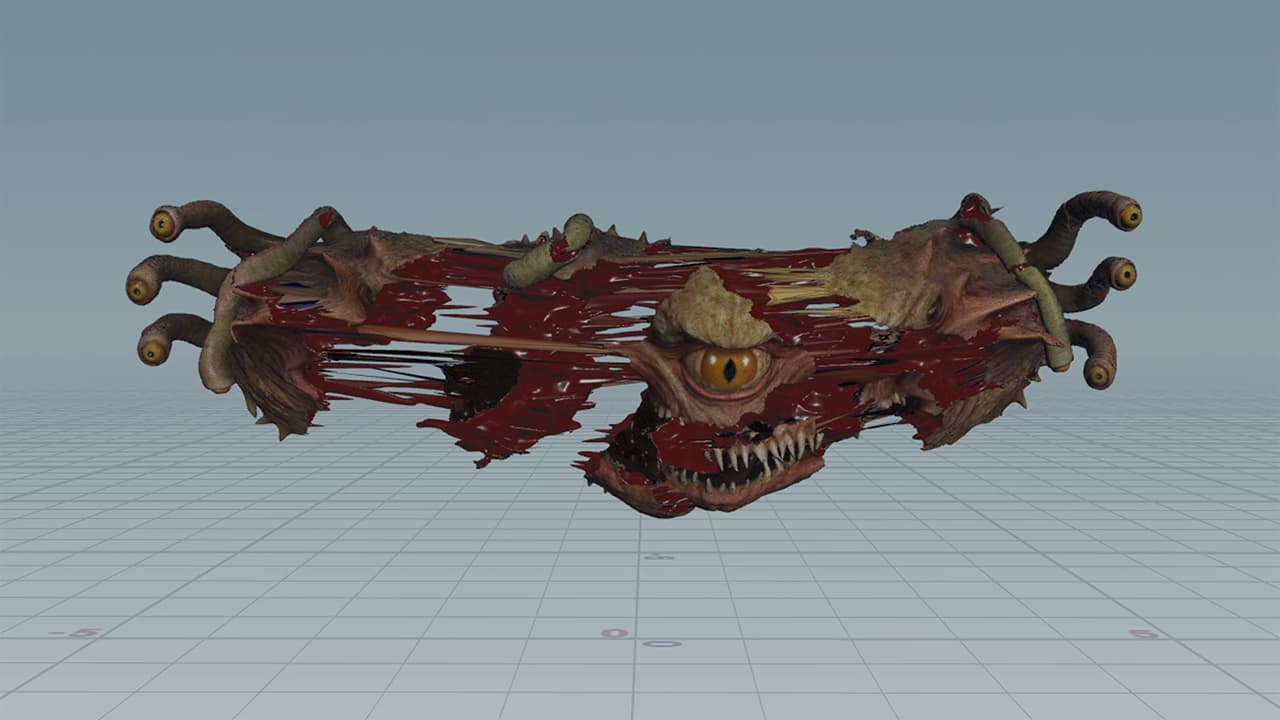
The initial spark came from a tutorial by Resilient Picture Company focused on softbody tearing and blood simulation in Vellum.
I wanted to take that tearing idea and apply it to a gameplay context instead of treating it as a standalone FX shot.
Choosing a Beholder from Dungeons & Dragons was partly nostalgic. Playing Eye of the Beholder back in the day, it caused me a lot of pain — and also, since Beholders are resistant to magic, a brutal, physical spell felt like a fitting solution.
Video progress: https://www.artstation.com/artwork/L46XG5
First rough idea – Get things moving
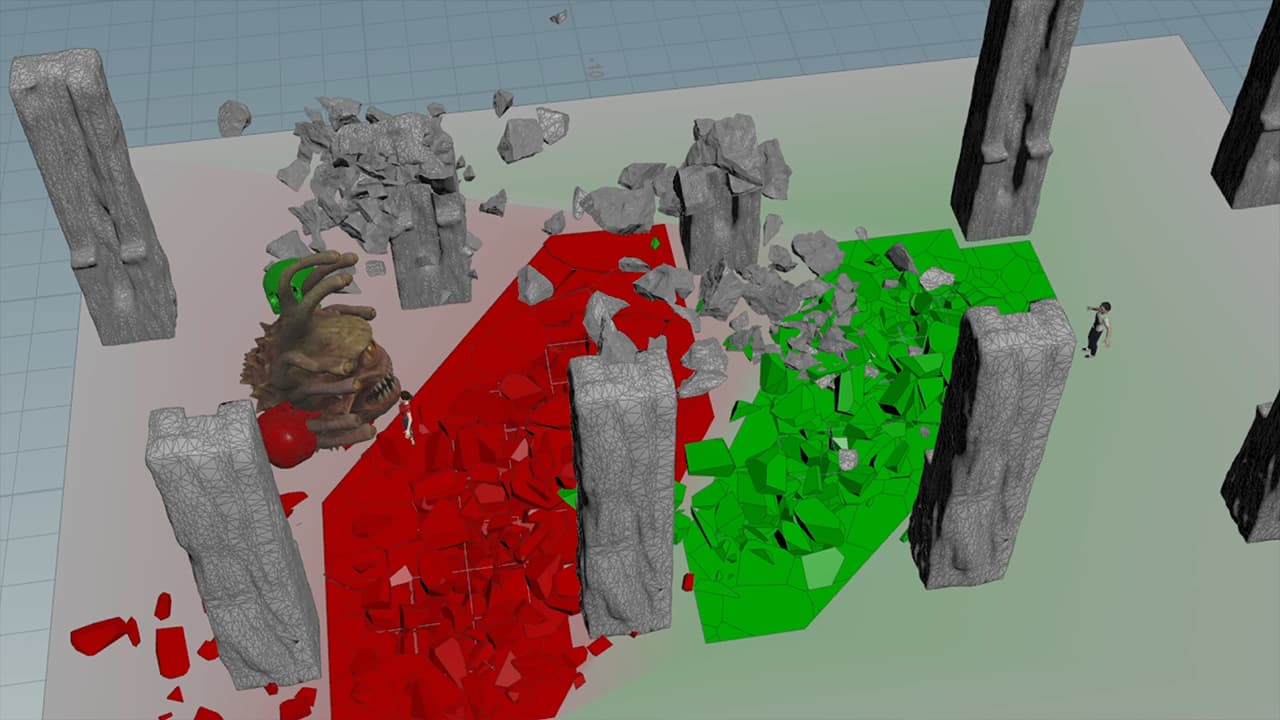
To highlight the spell’s physical nature, I explored which elements could be destroyed and what projectile types would work best. After a few trials, I chose common, yet proud skulls as the projectiles, moving along paths that affect both terrain and upright columns.
Third-person and top-down viewpoints were taken into account early on, guiding choices around scale and trajectory to ensure clarity in different gameplay views.
Video progress: https://www.artstation.com/artwork/L46Dar
Locking layout, pacing, and spell length
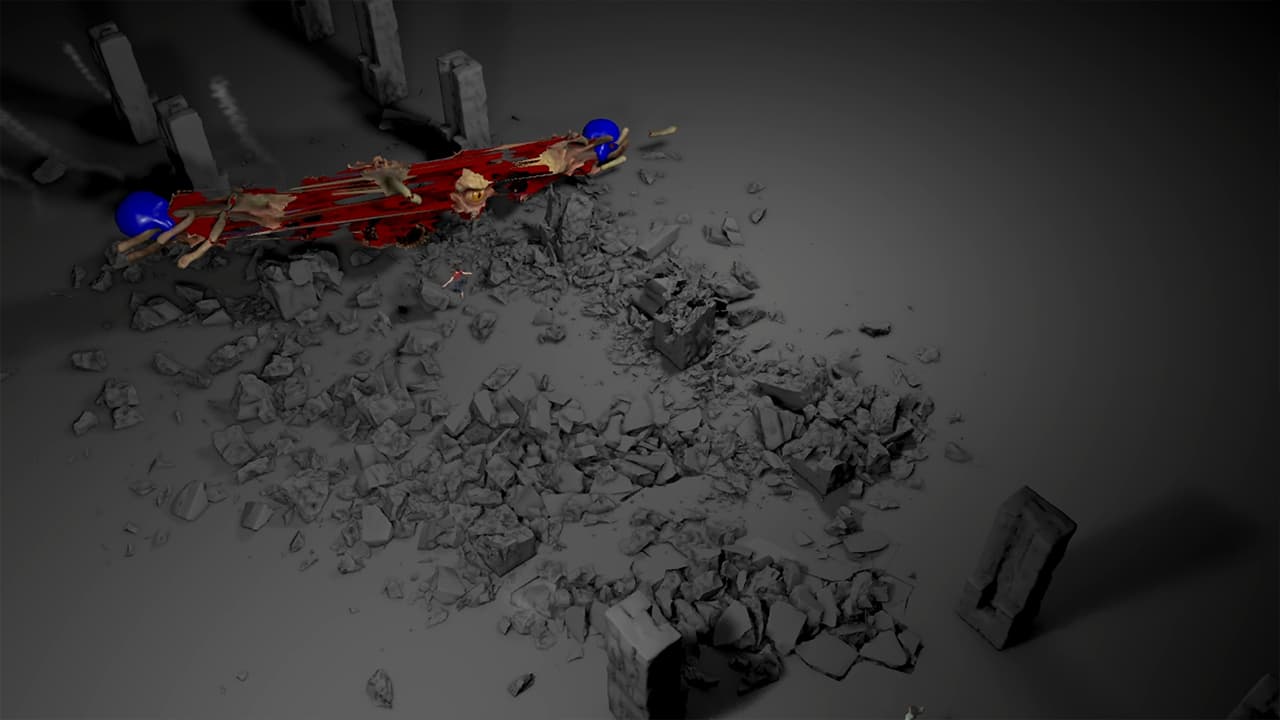
Once the basic idea was readable, the next step was figuring out how long the spell should be and how it flows.
That meant focusing on layout, pacing, amount of destruction, and the curvature of the skull trajectories rather than visual detail.
Focused on defining spell length and pacing.
Adding tearing early helped evaluate the full sequence as one readable loop.
Seeing all major elements together made it much easier to judge timing and spot moments that felt too fast, too slow, or visually unclear.
Video progress: https://www.artstation.com/artwork/zxvJEq
Blood, veins, and little technicals.
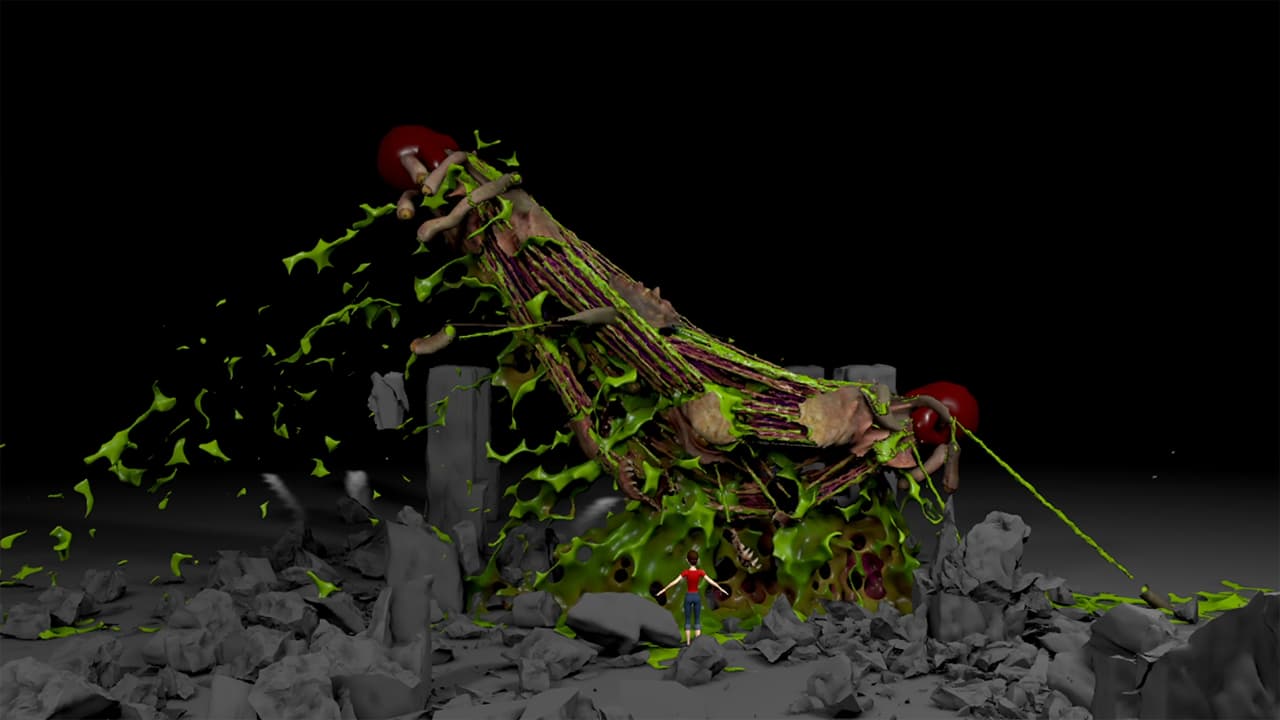
After timing started to feel right, I moved on to the Beholder itself — blood, veins, tendons.
Not everything went through the same process: blood and guts were exported as VAT fluids without UVs, colored directly in Houdini, while the skin had to keep proper UVs and was deformed using point deform on the original mesh.
I’m calling this out because these kinds of technical constraints really matter when making early artistic choices.
Video progress: https://www.artstation.com/artwork/AZxPZW
Skulls and Mana elements
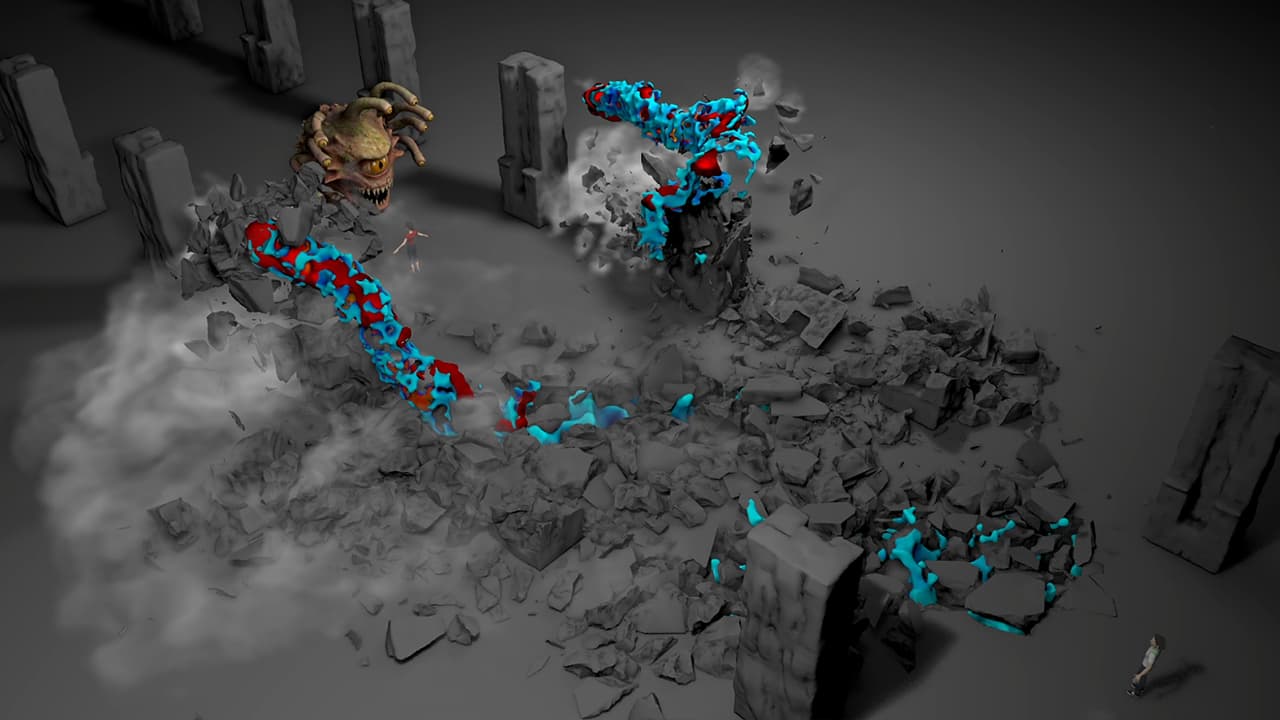
Next, I focused on the skulls and mana elements.
My goal was to treat the skulls as standalone entities, independent from the caster and the spell energy itself. They needed to feel like active participants in the scene — something summoned and unleashed through a portal — not just glowing projectiles fired forward.
To support that idea, two different skull variants were created, differing in shape and color.
Video progress: https://www.artstation.com/artwork/vb6Vx3
Moving everything into Unreal
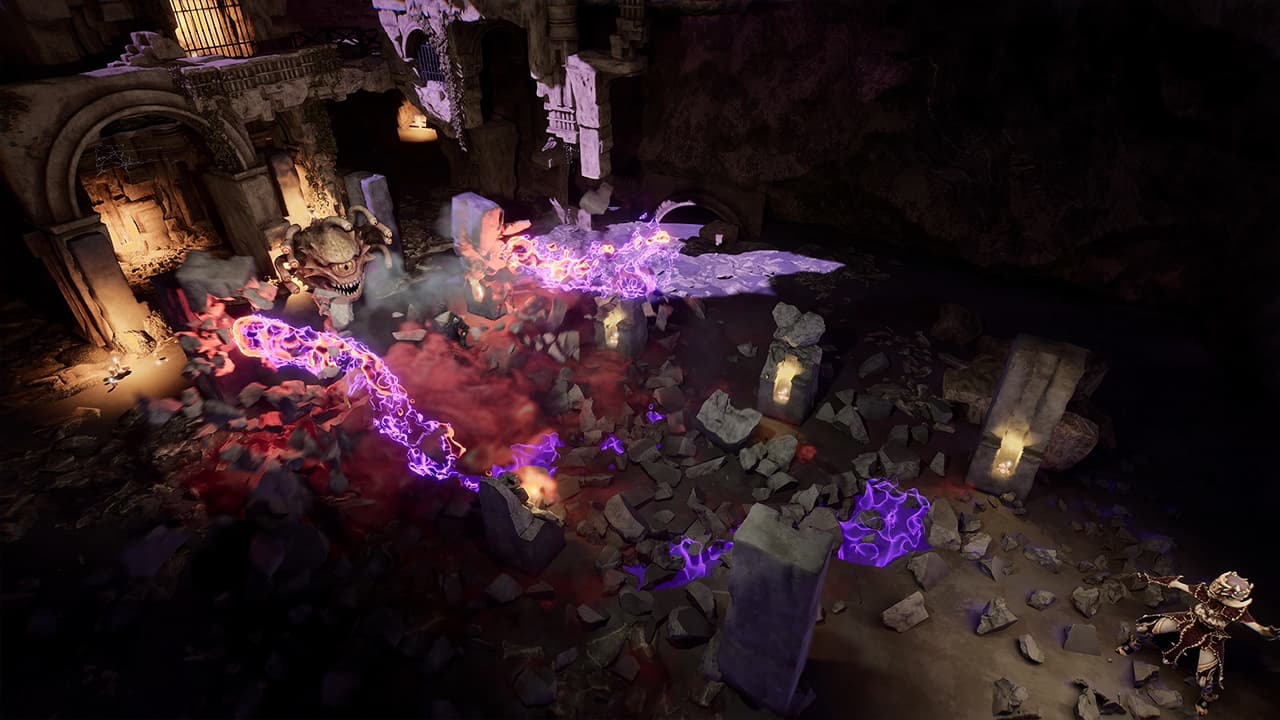
Once all key elements existed, the work moved fully into Unreal Engine, using VAT, FBX, and Houdini point caches to handle the effects in Niagara.
A slightly modified Epic sample scene served as the arena.
Here, I added skull spawn effects, their return into portals, and the Beholder being dragged along with them.
Interestingly, the blood colliding with the environment during the portal explosion wasn’t planned at all. It happened almost accidentally — but it added so much energy and chaos that I kept it. Honestly, I didn’t have a better idea for the portal opening moment anyway.
At this stage, blood faded quickly. The plan was to later handle ground interaction with Niagara decals and splash particles using collisions.
I also added Mixamo characters with animations. The spell-casting character was important, but I also added a front-line setup inspired by Eye of the Beholder to give the scene more context.
Once the loop was complete and the sequence readable as a whole, I shared this iteration on forums to gather feedback on what worked and what didn’t.
Video progress: https://www.artstation.com/artwork/EzP00A
Caster Perspective – Skull Readability in Gameplay Context
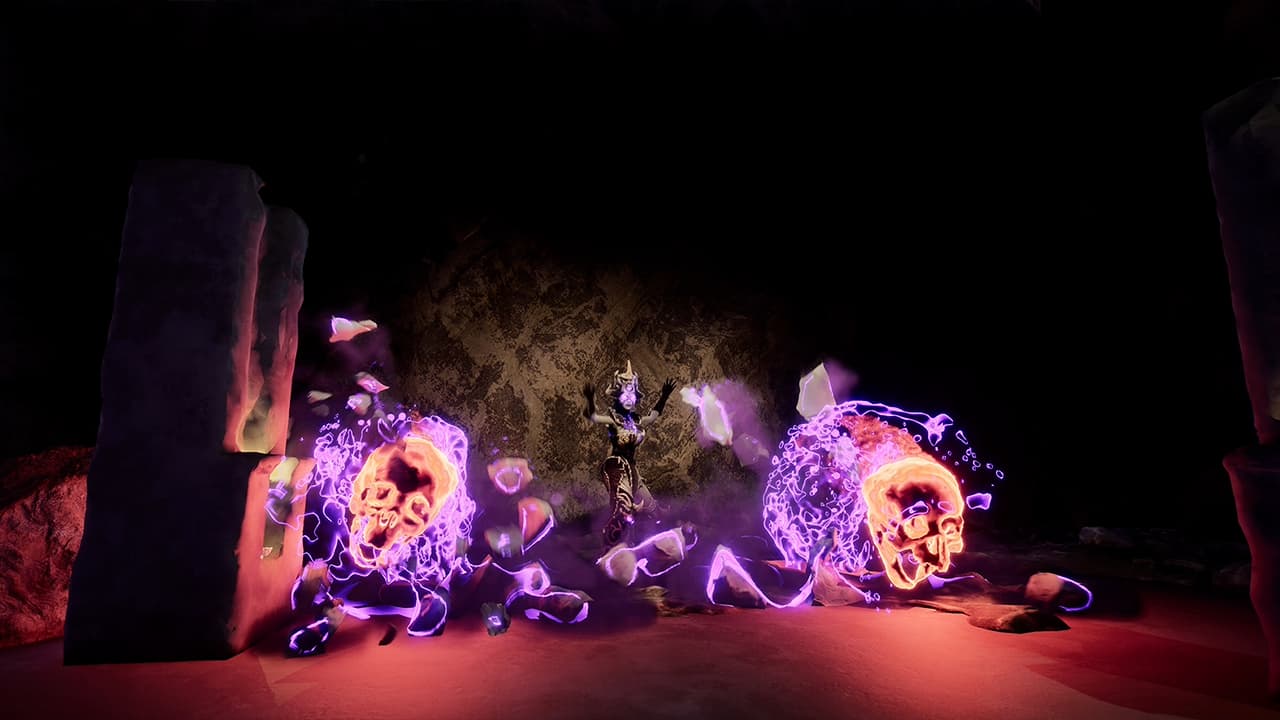
Final shaping focused on clarity and intent.
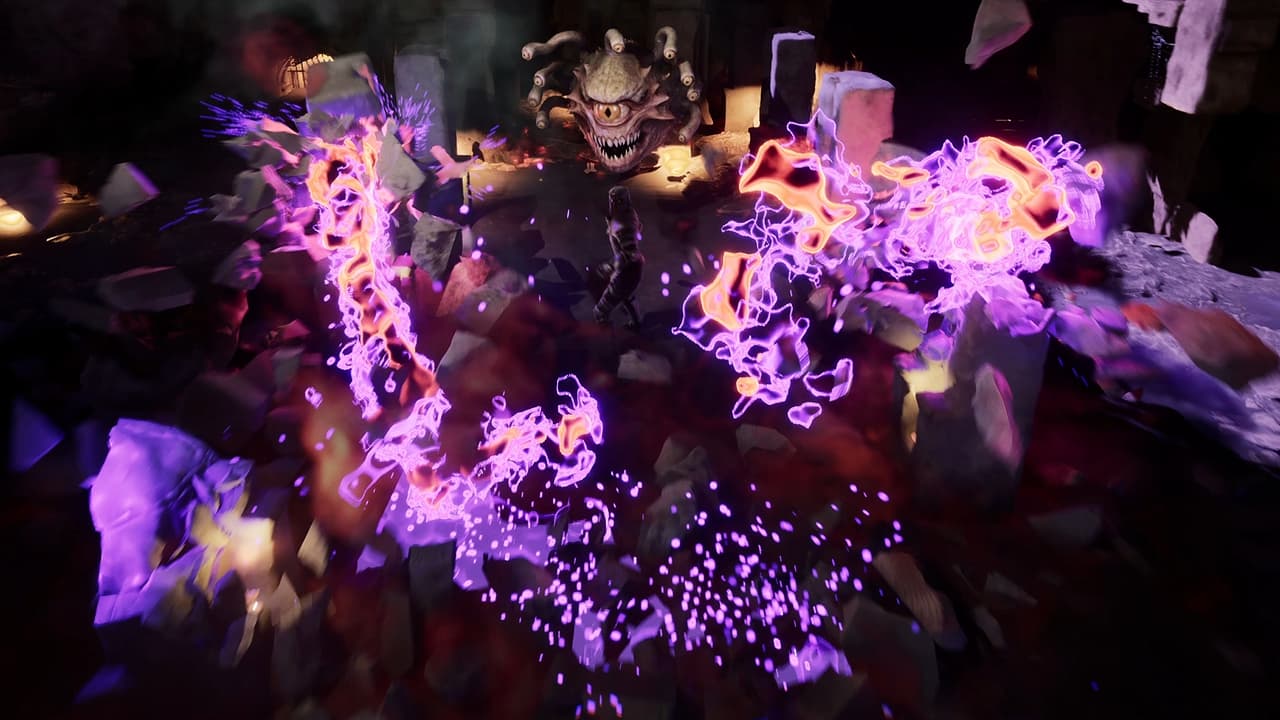
The caster shot frames the skulls up close as tearing entities meant to grab and rip, not passive projectiles.
At the same time, it visually links the caster’s purple accents with the ground tearing open, the portal forming, and the mana stream pushing the skulls toward the target.
During flight, effect intensity is reduced to guide attention forward, and during tearing it’s lowered further so the destruction remains the focal point.
Blood pass and closing the scene
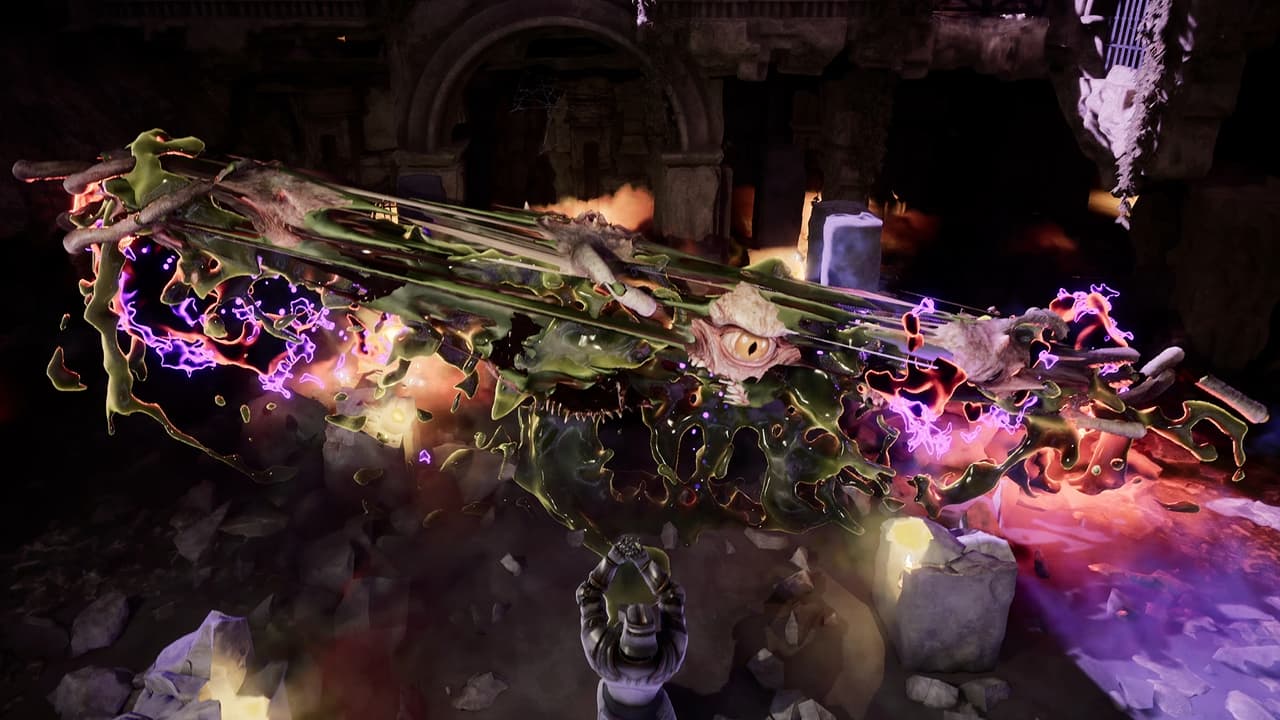
For the final blood pass, everything was handled in Houdini.
I refined shaders, adjusted color, and added vapor during explosions and ground contact.
Lore-wise, acidic blood fits certain Beholder variants, and it also helped wrap up the scene while managing a few imperfections as the blood fades away.
A separate but important mention goes to Zibra VDB. It handled all volumetrics extremely well and allowed fast iteration. Thanks to curve-based color control in the shader, matching volumetrics to different effects was quick and flexible.
Summary and Credits
As a summary of the full process outlined above, this project represents an exploration rather than a final answer. The prototype format made it possible to iterate freely, identify weaknesses, and better understand what the spell needs to become a solid gameplay effect.
Any thoughts or feedback are very welcome.
Final Version: https://www.artstation.com/artwork/1NqBwZ
Softbody tearing inspiration: Resilient Picture Company
Definitely worth checking out — they offer great learning materials. Even though I didn’t use their project files myself, if you find them helpful, consider supporting their work.
Beholder model: Beholder – Dungeons & Dragons, by Brian Trepanier
Used under CC BY 4.0: https://creativecommons.org/licenses/by/4.0/